
Arrest Warrants in Fannin County
Criminal arrest procedure in Texas runs on Code of Criminal Procedure Chapter 15. A judge or magistrate reviews a complaint or affidavit for probable cause. If the review holds up, the judge signs an order that authorizes an officer to arrest the person named. That process differs from a bench warrant for a missed court date, and from a capias pro fine on a fine-only case. In Fannin County, where you look depends on the charge's level. Felonies route to the 336th Judicial District Court, and the District Clerk keeps those records. Misdemeanor files sit with the County Clerk's criminal department for the County Court at Law. Some lower-court arrest paperwork belongs to a justice of the peace or a municipal court instead, so ask the clerk which court issued the order before you search anywhere else.
Fannin County Felony Warrants Route to the 336th District Court
Felony warrant records in Fannin County live at the 336th Judicial District Court. The District Clerk keeps the file and takes written records requests at dcrecords@fanninco.net. Treat any portal entry as a lead, not an answer. Ask the clerk to confirm the cause number, the issuing court, and what record you can actually see. The official 336th District Court page posts the court's contact details. Anyone facing a current arrest concern can also call the Sheriff at 903-583-2143 and ask where law-enforcement confirmation or surrender questions belong. That one call saves a wasted trip.
What a Fannin County Arrest Warrant Contains
Fannin County publishes no live warrant-result layout on its portal. So treat each field as something to request and verify with the issuing clerk, not a promise of what a public search returns. Always give the clerk a cause number and court name. That keeps people with similar names from being confused with each other.
| Number | Format not confirmed Ask which cause or warrant number identifies the file. |
|---|---|
| Named person | Confirm identity with the court using non-public information through its official channel. |
| Charge | Ask the clerk to identify the underlying case or complaint. |
| Issuing court | District, County Court at Law, JP, or municipal court depending on the case. |
| Bond or release terms | Confirm current terms with the issuing court or jail. |
| Issue and status dates | Ask whether it remains active, was served, or was recalled. |
Chapter 15 Sets the Fannin Arrest-Warrant Process
Code of Criminal Procedure Chapter 15 sets the whole framework for Fannin County arrest warrants: complaints, probable cause, magistrate action, what the warrant must contain, service, and public-information rules. The statute gives you the process. The court that issued a specific warrant still controls its record and current instructions. Article 15.26 governs public access to an arrest warrant and its affidavit. Access has limits, though. A pending investigation, a sealed filing, a juvenile matter, or a protected detail can all be withheld. Request what is releasable, and if an office holds something back, ask it to cite the basis. Read the official Chapter 15 text alongside whatever the court confirms for you.
How Fannin County Arrest Warrants Are Served
Who serves a Fannin County warrant depends on the process. The Sheriff's Office, constables, municipal officers, and other authorized peace officers can all carry out service. The Sheriff lists its office at 2375 Silo Road, with jail contacts at a separate location. Its public page does not publish a warrant-window schedule, a walk-in surrender protocol, or the jail's accepted bond methods. So call before you show up. Ask where the person should report, whether bond has been set, what identification to bring, and how the court will deliver the next date. The issuing clerk owns the case file. For current custody or service routing, the Sheriff or the jail answers.
County Misdemeanor Warrants Go Through the County Clerk
County Court at Law misdemeanors in Fannin County run through the County Clerk's criminal department, including criminal searches and warrant paperwork. The office's FAQ lists a $10-per-name check and a Certificate of Search. Before calling 903-583-8502, gather the offense, the offense date, date of birth, and any cause number. One limit worth knowing: a County Clerk check does not reach every JP or city municipal docket. The official misdemeanor FAQ also points warrant questions to the Criminal District Attorney's Office or the Sheriff's Office. Widen your calls accordingly.
Arrest Warrant vs Summons vs Bench Warrant
Each of these documents works differently. An arrest warrant, a summons, and a bench warrant carry different triggers and different instructions. Ask the court what your document actually says, then follow its response date and filing rules. For a missed court obligation, the Fannin County bench-warrant page walks through what comes next.
| Feature | Arrest Warrant | Summons | Bench Warrant |
|---|---|---|---|
| What it orders | Officer to arrest the named person. | Person to appear without an arrest command. | Response to an unmet court obligation. |
| Basis | Probable-cause process on a complaint or affidavit. | Notice with an appearance instruction. | Missed date, noncompliance, or contempt in an existing case. |
| Who issues it | Judge or magistrate. | Court or authorized process under the case rules. | Judge in the court that set the obligation. |
| How to respond | Ask counsel and court about surrender and bond. | Follow the date and instructions on the notice. | Ask the court about reset, appearance, or recall. |
Federal Arrest Warrants Route to the Sherman Division
Federal matters take you out of the county courthouse entirely. Fannin County sits in the Eastern District of Texas's Sherman Division, and federal case records stay separate from JP, city, County Court at Law, and district-court files. PACER may show public docket documents. Sealed cases and warrants, though, may not appear there, and no public roster lets anyone self-check for a federal warrant. The Eastern District courthouse directory lists the Sherman contacts to call. The U.S. Marshals page names a Sherman office and a Joint East Texas Fugitive Task Force. Those contacts still cannot promise access to sealed information. The directory page is the federal contact route for Fannin County matters.
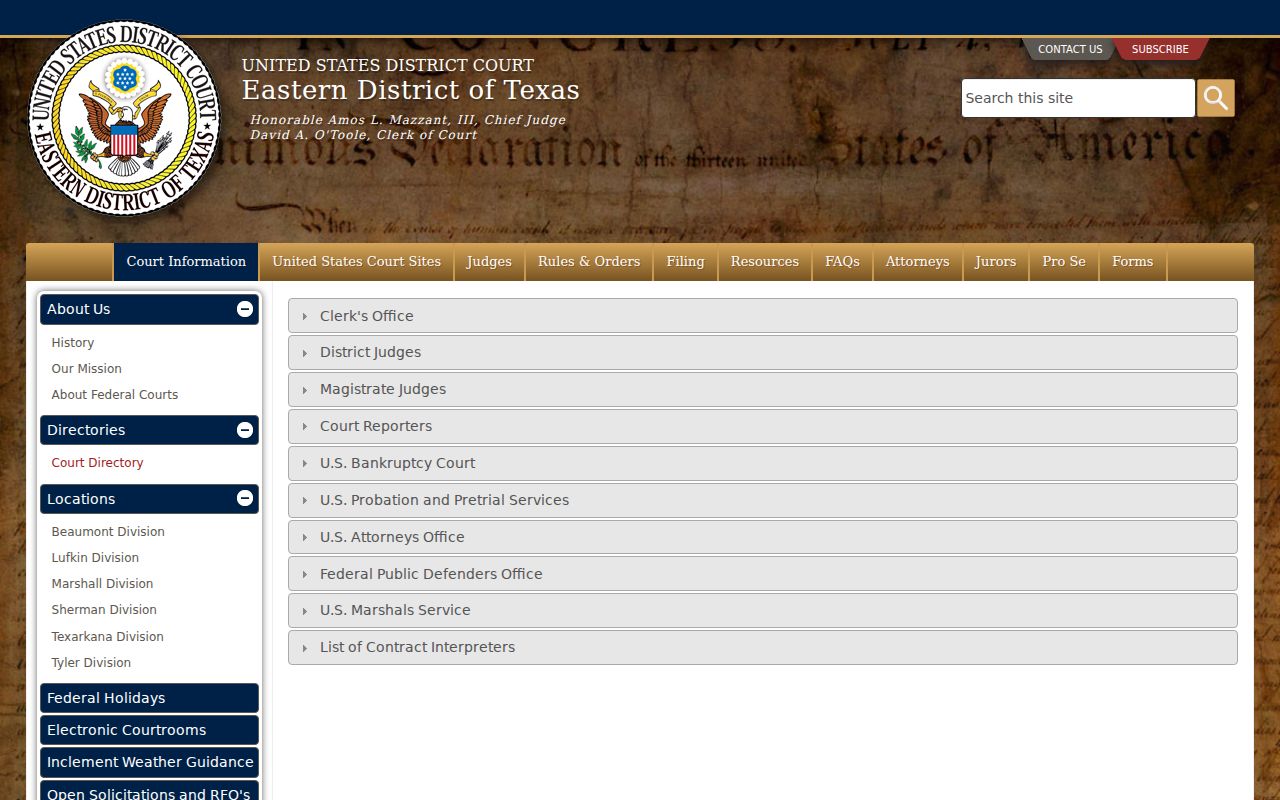
For a public federal docket in a Fannin County matter, use PACER/CM-ECF. Remember it certifies nothing about warrant status.
What to Do If There Is a Warrant for You
Do not let a VINE check, a license hold, or an empty portal result settle an arrest-warrant question in your mind. None of those tools is definitive. Ask the Sheriff for current service routing, and ask the issuing clerk for the cause number, the bond or release instruction, and whether a surrender or attorney-arranged appearance is required. A lawyer can go further, contacting the court about a motion to recall or quash, bond terms, or a planned appearance. Keep one thing clear: posting bond may secure release, but it does not finish the case. After any court action, ask for the next date in writing. Confirmation on paper beats a phone memory every time in Fannin County.
Important: Speak with an attorney before surrendering or posting bond; ask the court and jail to confirm the location, current terms, and required steps.
Public Arrest-Warrant Access Has Texas Limits
Texas opens most government records, but statutes carve out exceptions. The Public Information Act yields here to Government Code §552.108, which can shield law-enforcement material when release would hamper an investigation or prosecution. Family Code §58.010 goes further and restricts certain juvenile warrant information. Fannin County tells visitors as much on its public records page, noting that online records stop at what has been approved for publication. Ask the responsible clerk for whatever portions can be released, and have the office name any exception it is applying. District records take a written route: dcrecords@fanninco.net. For local contacts and confirmation questions, see the Fannin County warrant resolution steps.